

How To Write A Recipe Fro Giving Sothing To Others Template
Sherri is an online writer with years of experience writing nigh cooking and recipe writing.
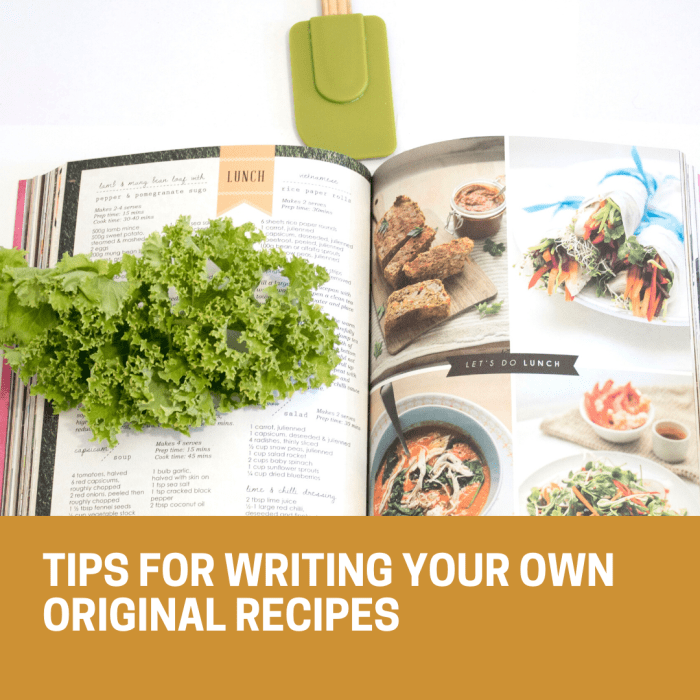
Read on to learn how to write your own recipe book.
S O C I A Fifty . C U T
Practise you lot desire to write a cookbook, publish your original nutrient recipes online, or share recipes with friends? No matter which of these yous have in listen, when it comes to writing your original food recipes, yous need to requite your reader every opportunity for success. Make your recipes easy to write an easy to follow by using these x recipe writing tips.
Tips for Writing Your Own Original Recipes
- Document your original recipe every bit yous go far.
- Exist specific about ingredient measurements and forms.
- Apply unremarkably accepted terms to depict ingredient preparation and cooking methods.
- Use a template when writing your recipe.
- Rewrite your draft notes into recipe class.
- Write a brief introduction.
- Include images.
- Include serving suggestions.
- Utilize a spell checker.
- Ask for a review from a fresh pair of eyes.
1. Certificate Your Original Recipe as You Make Information technology
I continue a pad of big, unlined paper in the kitchen for taking notes virtually how I fix a recipe I'm virtually to write. The notes I have are the first draft of my finished written recipe. I write these notes in the order of the steps that go into making the recipe. This first draft is the nigh accurate moving picture I tin testify you of how I become about creating an original recipe. You can meet that I cantankerous out items and rewrite them every bit I experiment, and that the paper collects $.25 of devious ingredients while the ink smears under wet easily. These notes are the free-form record of a real fourth dimension kitchen event. They eventually come to contain all the information I need in order to write a recipe that others can follow with success.
Documenting the Cooking Process
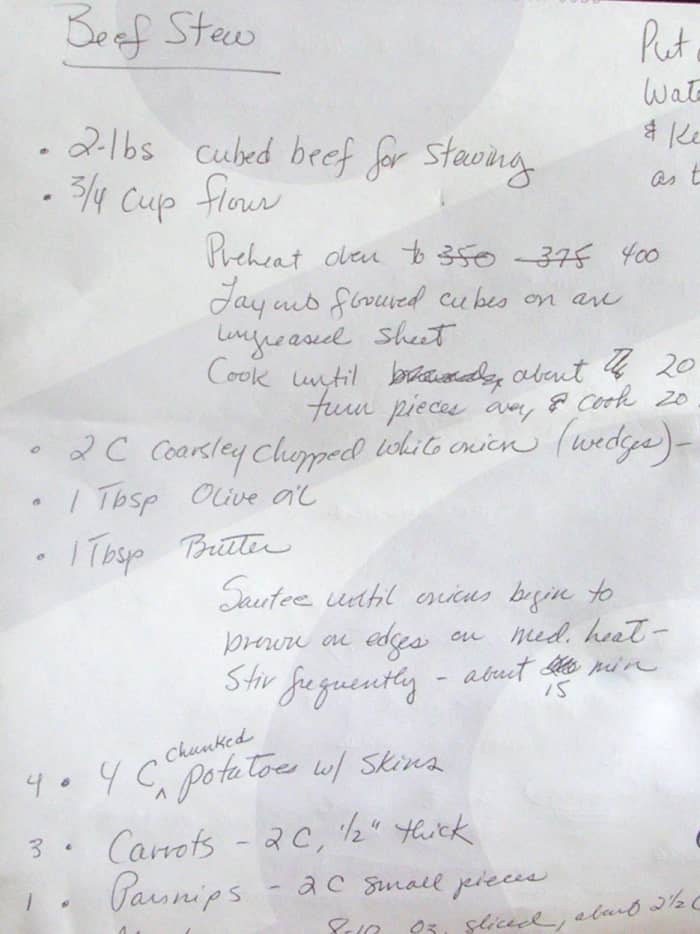
These detailed notes show the order in which I created the beefiness stew. The organization and format of this kickoff draft will alter dramatically past the time the recipe is finally written.
Sally's Trove
two. Be Specific About Ingredient Measurements and Forms
If I were writing a recipe for my Grandma Ellie, one of the virtually accomplished cooks I've ever known, I could safely substitute a "compression" for 1/8 teaspoon or a "handful" for 1/3 cup. In fact, when Ellie wrote her recipes, that'south how she wrote her measurements. But this kind of provincial measuring system won't help a reader who didn't abound up in Ellie's kitchen, a reader who wants to make the delicious dish you are promising.
You can see from my initial notes that I recorded precise measures as my beefiness stew came together. Different forms of the same nutrient occupy dissimilar volumes depending on whether they are whole, coarsely chopped, finely diced, fresh, cooked, or liquefied. A carrot cut into 1/2-inch rounds will occupy less volume than if cutting into one-inch rounds. In other words, be specific about the grade of the nutrient to be measured. Again, brand these notes on that working kitchen typhoon, every bit yous gear up your original recipe.
iii. Utilise Normally Accepted Terms To Describe Ingredient Training and Cooking Methods
There are worlds of differences between chopping and mincing, grilling and frying, and besides many more than similar terms to mention. Choosing one term instead of the other tin make the deviation between success and failure for the cook who wants to follow your recipe.
Fortunately, many excellent cooking term dictionaries are easily accessible on the Internet. The Adept Housekeeping Dictionary of Cooking Terms is limited to the almost common terms, but is a good place to first earlier venturing into much more in-depth dictionaries such as the Epicurious Nutrient Lexicon.
4. Use a Template When Writing Your Recipe
Using a template makes your recipe writing procedure more efficient, since you don't have to make format or system decisions every bit you write. If you are interested in creating a cookbook, using a template is particularly important for keeping your writing and formatting consistent across recipes.
Depending on your proficiency with word processing, you can create your ain template or use 1 that's been created by someone else. If you want to create your ain recipe template, search the Cyberspace for "how to create a recipe template." If yous want to use an existing template, search "recipe templates [name of word processing software you take admission to]".
Central Template Elements for Writing Recipes
- Title
- Image
- Introduction
- Equipment
- Ingredients
- Method
- Serving Suggestions
- Footer: Echo Title and add together Engagement and Folio Number
Roll to Continue
Read More From Delishably
A Downloadable Recipe Card Template
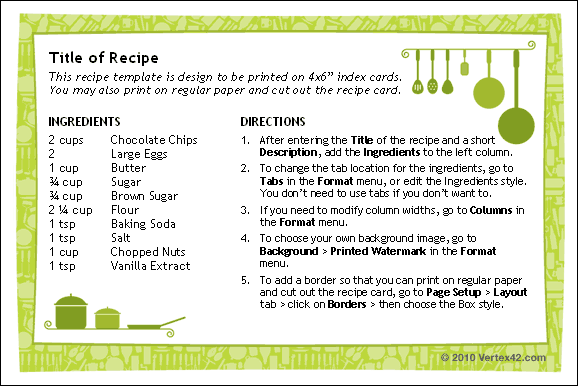
Recipe cards are great means to share recipes with friends and family. You can use a recipe card template like this one to organize content and format and to keep your writing consequent across recipes.
vertex42
5. Rewrite Your Typhoon Notes Into Recipe Course
The organization of a finished recipe is quite dissimilar from the notes you make while documenting the cooking procedure. That first typhoon is a record of the creative procedure, but its arrangement is counterproductive to creating a recipe others can follow. Equally you can see in the notes I took while creating my beef stew recipe, the ingredients and method are intermingled for each phase of the cooking. In the concluding recipe, ingredients and method besides every bit equipment have their own sections. Cooks expect recipes to be written in a sure gild, so don't disappoint them.
Start with the easiest elements, equipment and ingredients, which are simple lists. Be consistent with formatting and always apply the full proper noun of a measurement; for instance, use tablespoon instead of tbsp, pound instead of lb. Listing equipment and ingredients in the club they volition be used.
Next, review your creative notes and write the method steps in the guild they are performed. As you review and rewrite these steps, picture in your mind what you did and how you did it. Your goal in writing these steps is to let your reader glide through them without stumbling. You accomplish this excellence by imagining yourself in your reader'southward shoes, anticipating what the reader needs to know.
6. Write a Cursory Introduction
A proficient time to write an introduction is afterwards you've re-written your draft notes, or even later. By that time, most of the pieces of your recipe will take come together, and you may have fresh insights about what yous want to tell readers well-nigh your recipe. The introduction can include a scrap of the history of your recipe, information about special features such as depression-fatty or sugar-free, and anything else yous believe will entice your reader to make your recipe.
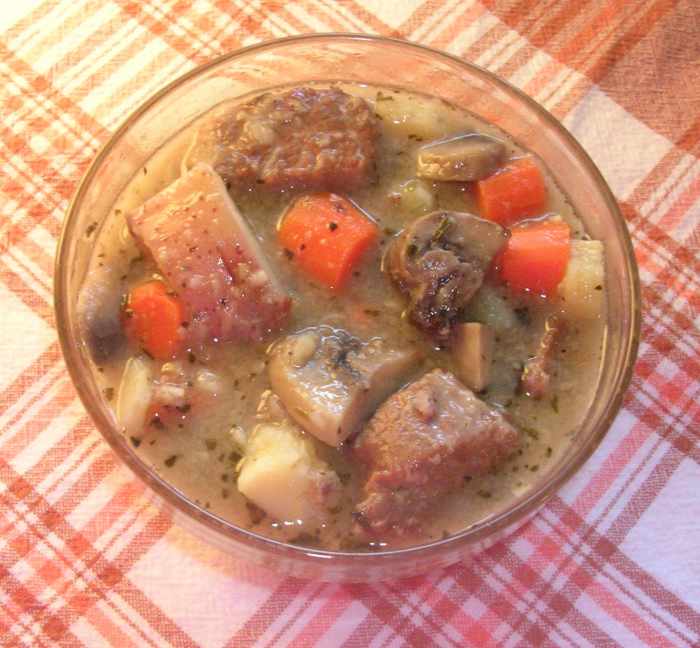
A basin of the finished beef stew.
Sally's Trove
seven. Include Images
In that location is no doubt that food photography is an art and a profession every bit well, but absent a professional photographer, don't hesitate to include your ain photos or drawings of ingredients, equipment, and the finished dish. Your readers will appreciate your efforts.
When a major publisher wants to sign a contract with you lot for a book of your recipes, then those professional photos and drawings volition happen like magic.
8. Include Serving Suggestions
This is your opportunity to help the reader complement your recipe with foods that you know add wellness benefits and other enhancements. What would a somewhat colorless dish of kielbasa and cabbage be without a serving of brilliant cherry-red pickled beets? What would a hearty beef stew be without a slice of crusty bread for sopping upwards the gravy? Think about how yous like to serve this recipe of yours on your table. What foods and beverages enhance the appeal of your dish? Once more, your readers will capeesh your suggestions.
ix. Apply a Spell Checker
No matter how careful you've been in the writing process, I guarantee a spell checker is going to find misspellings.
ten. Ask for a Review From a Fresh Pair of Eyes
By the fourth dimension you've written your recipe, spellchecked information technology, and re-read it too many times, you lot are now blind to whatever faults it may incorporate. Get a fresh view from optics that are non exhausted past the process you lot've only been through. Not but will these fresh eyes find errors that yous missed, they may likewise offer valuable insights that will serve to improve your written recipe.
The Challenges and Joys of Writing Your Original Recipes
Writing a recipe is every bit exacting as writing a set of instructions for constructing a building or using a piece of equipment. Information technology is "How To" writing, which is a specific, disciplined form of writing. By following these 10 recipe-writing tips yous tin write recipes that anyone tin can follow, with success.
© 2011 Sally'southward Trove. All rights reserved.

How To Write A Recipe Fro Giving Sothing To Others Template,
Source: https://delishably.com/cooking-equipment/How-To-Write-Original-Food-Recipes-10-Tips-for-Making-Your-Recipes-Easy-To-Follow
Posted by: yoderfiew1977.blogspot.com
0 Response to "How To Write A Recipe Fro Giving Sothing To Others Template"
Post a Comment